
How to Build a Villa in Krong Siem Reap: The Complete Guide to Designing and Building Your Dream Home in Cambodia
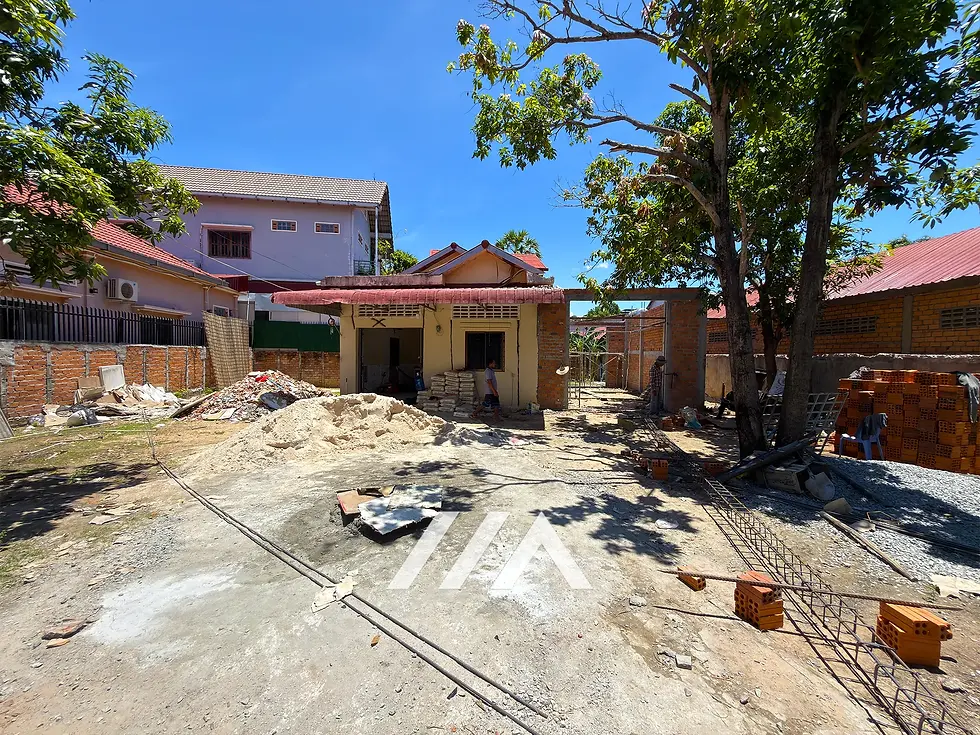
Building a luxury villa in Krong Siem Reap is no longer just a dream reserved for large property developers or international investors. Over the last decade, Siem Reap has become one of Cambodia's most attractive destinations for people looking to build custom homes, retirement properties, family residences, boutique holiday villas, and long-term investment properties.
Whether you are relocating to Cambodia, investing in Southeast Asia, retiring overseas, or creating your forever home, building your own villa offers complete freedom over the design, quality, layout, finishes, and long-term value of your property.
Unlike purchasing an existing house, constructing a villa from the ground up allows you to create a home specifically tailored to your lifestyle. Every aspect from the orientation of the building and room layout to the swimming pool, gardens, smart home systems, imported materials, and luxury finishes can be designed exactly how you envision it.
However, building a villa in Cambodia is very different from building in countries such as the United Kingdom, Australia, Europe, or North America. Construction methods differ. Building materials differ. Labour practices differ. Permit procedures differ. Climate conditions differ. Even something as simple as choosing the wrong plot of land can significantly increase your construction costs before the first foundation is poured.
This comprehensive guide has been created to explain every stage of the process in detail, helping both local and international clients understand what is involved when building a luxury villa in Krong Siem Reap. Rather than offering general advice, this guide follows the complete journey of a real luxury villa currently being developed by Luxe Property Cambodia, documenting every major stage from purchasing the land through to handing over the completed home.
Throughout this guide you'll learn about:
Choosing the right land
Understanding land titles
Working with architects
Villa design and planning
Construction permits
Site preparation
Demolition
Foundations
Structural engineering
Reinforced concrete construction
Roofing systems
Plumbing installation
Electrical installation
Septic systems
Water wells
City water connections
Internet and utilities
Swimming pool construction
Kitchens and bespoke cabinetry
Interior design
Landscaping
Project management
Construction costs
Quality control
Common mistakes to avoid
By the end of this guide, you'll have a complete understanding of how luxury villas are designed and built in Cambodia and what separates a professionally managed project from one that experiences delays, budget overruns, or costly structural problems.
Why Krong Siem Reap Is One of Cambodia's Best Places to Build a Luxury Villa

While Phnom Penh remains Cambodia's commercial and financial centre, Krong Siem Reap has become one of the country's most desirable residential destinations.
Internationally recognised as the gateway to the UNESCO World Heritage Site of Angkor, Siem Reap has evolved into much more than a tourism city. Over recent years it has experienced substantial investment in roads, drainage, public parks, utilities, hospitality developments, healthcare, education, and lifestyle amenities, making it increasingly attractive for long-term residents and investors.
Many people are surprised by the quality of life available.
Compared to many rapidly expanding cities across Southeast Asia, Siem Reap offers:
Lower traffic congestion
Cleaner surroundings
Wide modern roads
Large residential plots
Established expatriate communities
International schools
Modern hospitals
Excellent restaurants
Boutique shopping
Championship golf courses
High-quality resorts
Strong tourism demand
Easy access to the new Siem Reap–Angkor International Airport
For buyers seeking privacy, space and a relaxed lifestyle, building a villa in Siem Reap often provides significantly better value than purchasing similar property in neighbouring countries.
Large plots make it possible to include:
Private swimming pools
Outdoor entertainment areas
Home offices
Guest houses
Landscaped gardens
Garages
Staff accommodation
Gym facilities
Wine cellars
Rooftop terraces
These features are often difficult or prohibitively expensive to achieve in densely populated cities.
Why Build Instead of Buying an Existing Villa?

Many buyers initially consider purchasing an existing villa. Although this may appear to save time, there are several advantages to designing and constructing a new property.
1. Complete Design Freedom
You are not limited by someone else's decisions.
Your villa can be designed around your lifestyle rather than adapting your lifestyle to an existing building.
You choose:
Number of bedrooms
Ceiling heights
Kitchen layout
Bathroom design
Natural lighting
Energy efficiency
Outdoor living spaces
Pool size
Garage configuration
Entertainment areas
Every square metre works specifically for your family.
2. Modern Construction Standards
Many older homes in Cambodia were built using outdated construction techniques.
A newly constructed villa can include:
Engineered reinforced concrete structures
Modern waterproofing systems
Proper drainage design
High-performance insulation
Premium electrical systems
Smart home automation
Solar-ready infrastructure
EV charging points
Energy-efficient air conditioning
Double-glazed windows
Premium roofing systems
These improvements increase comfort while reducing future maintenance.
3. Better Long-Term Investment
Well-designed villas in desirable areas typically retain value better than ageing properties requiring continual repairs.
Modern architecture, premium finishes, efficient layouts, and quality construction remain attractive to future buyers and tenants.
4. Lower Lifetime Maintenance Costs
Older properties often require significant repairs shortly after purchase.
Common issues include:
Roof leaks
Poor plumbing
Outdated wiring
Cracked foundations
Termite damage
Water ingress
Poor ventilation
Building from scratch allows these problems to be eliminated before they occur.
Is Building a Villa in Cambodia Difficult?
The answer depends entirely on your planning.
Many successful villa projects begin months before construction starts.
The planning stage usually determines whether a project runs smoothly or encounters expensive delays.
Professional planning includes:
Selecting suitable land
Confirming legal ownership
Checking zoning requirements
Topographical surveys
Soil investigations
Architectural planning
Structural engineering
Budget forecasting
Utility planning
Construction scheduling
Material procurement
Contractor selection
Quality control systems
Skipping these early stages often creates problems that become increasingly expensive to correct once construction begins.
One of the most common mistakes made by first-time builders is assuming construction starts with concrete. In reality, successful projects begin with planning. Every decision made before breaking ground influences the overall quality, cost, timeline, and performance of the finished villa.
What You'll Learn Throughout This Guide
This guide has been written for anyone considering building a villa in Krong Siem Reap, regardless of whether you're planning a modest family home or a multi-million-dollar luxury residence. Over the following chapters, we'll take you through every stage of the construction journey, including:
Finding and purchasing the right land.
Understanding Cambodian land titles and ownership structures.
Designing a villa that suits the climate and your lifestyle.
Obtaining the necessary construction approvals.
Preparing the site and carrying out demolition where required.
Constructing foundations, columns, beams and reinforced concrete structures.
Installing plumbing, drainage, electrical systems, air conditioning, and utilities.
Completing roofing, windows, flooring, kitchens, bathrooms and bespoke interiors.
Building swimming pools, gardens, perimeter walls and external landscaping.
Managing budgets, timelines, contractors and quality inspections.
Preparing the property for occupation, resale or rental.
Whether your goal is to create a permanent family residence, a retirement home, an Airbnb investment, or a luxury holiday villa, understanding the complete construction process will help you make informed decisions, avoid unnecessary costs, and build a property that stands the test of time.
Choosing the Perfect Plot of Land in Krong Siem Reap

Before you think about architects, construction drawings, swimming pools, or luxury interiors, you need to choose the right piece of land. Every successful villa begins with a great location. No matter how well a home is designed or how much money is invested into construction, a poor land purchase can create expensive problems that affect the project for decades. In contrast, selecting the right plot provides a solid foundation for a home that is enjoyable to live in, easier to maintain, and more valuable in the future.
For most people, purchasing land will be the largest investment they make before construction even begins. Taking the time to understand the local market and carry out proper due diligence is one of the smartest decisions you can make.
Start With Your Lifestyle Goals
Before viewing properties, ask yourself one simple question:
How do you want to live?
The answer should influence every decision that follows. Some buyers dream of a peaceful countryside estate surrounded by rice fields and mature trees. Others want to be within minutes of cafés, international schools, supermarkets, hospitals, and the city centre. Investors may prioritise rental demand and future capital growth, while retirees often prefer privacy, quiet surroundings, and easy access to healthcare. Understanding your priorities first will help narrow your search and prevent emotional decisions that may not suit your long-term plans.
Choosing the Right Area in Krong Siem Reap
Krong Siem Reap offers a wide variety of neighbourhoods, each with its own character and advantages. Some locations are ideal for luxury residential villas, while others are better suited to boutique resorts, commercial developments, or investment projects.
When comparing locations, consider:
Distance to Siem Reap city centre
Road quality and year-round accessibility
Future infrastructure improvements
Nearby schools and hospitals
Restaurants and shopping
Tourist activity
Noise levels
Flood history
Existing residential developments
Availability of utilities
Internet connectivity
Long-term development plans
The cheapest land is rarely the best value. Paying more for a well-positioned plot can reduce construction costs, improve resale value, and create a much better living experience.
Consider Future Growth, Not Just Today's Prices
One of the biggest advantages of building a villa is that construction often takes 12–24 months. During this period, surrounding infrastructure may continue to improve, potentially increasing the value of your investment.
Look beyond the current appearance of an area and ask questions such as:
Are new roads planned?
Are utility upgrades scheduled?
Are new residential communities being developed?
Are hotels, shopping centres, or commercial projects nearby?
Is the area attracting international buyers?
Many of today's premium residential areas looked very different only a few years ago.
Understanding Land Titles in Cambodia
One of the most important steps when purchasing land is confirming the legal ownership and title. Cambodia has several forms of land documentation, and understanding the difference is essential.
Hard Title
A hard title is generally regarded as the strongest and most secure form of land ownership. It is registered through the national cadastral system and provides clear legal recognition of ownership. For most villa projects, purchasing land with a hard title offers the highest level of confidence and is generally preferred by buyers, lenders, and investors.
Soft Title
Soft titles are recognised at the local administrative level and are common throughout Cambodia. Although many legitimate transactions occur using soft titles, buyers should carry out additional due diligence before proceeding. Depending on your circumstances, it may be possible to convert some soft titles into hard titles, although the process varies. Because every property is different, legal advice should always be obtained before purchasing.
Can Foreigners Buy Land in Cambodia?
One of the most common questions asked by international buyers is whether foreigners can own land. Under current Cambodian law, foreign individuals cannot directly own land in their personal name. However, there are several legal structures that may allow foreign investors to develop property while remaining compliant with Cambodian regulations.
These may include:
Long-term lease agreements
Cambodian legal entities
Cambodian nominee structures (which require careful legal consideration)
Land-holding companies
Other ownership arrangements depending on individual circumstances
Because ownership structures vary depending on nationality, investment goals, and legal requirements, professional legal advice should always be obtained before entering into any agreement.
Check the Shape and Dimensions of the Land
Not every plot is suitable for building a luxury villa.
A block that appears large on paper may have awkward dimensions that significantly restrict your design.
Ideal villa sites generally provide sufficient width and depth for:
A generous front entrance
Vehicle access
Gardens
Swimming pool
Outdoor entertaining space
Privacy from neighbouring properties
Future extensions if required
Long narrow plots often limit architectural flexibility and may increase construction costs.
Site Orientation Matters More Than Most People Realise
Cambodia has a tropical climate with high temperatures throughout much of the year.
The orientation of your villa can dramatically affect:
Indoor temperatures
Airflow
Natural lighting
Energy efficiency
Air conditioning costs
Outdoor comfort
An experienced architect will usually position living areas, outdoor spaces, windows, and shading to maximise natural ventilation while reducing direct afternoon heat.
This can make your villa significantly more comfortable without increasing operating costs.
Soil Conditions Can Add Thousands to Construction Costs
Two plots of identical size can have very different construction costs depending on the ground beneath them. Before purchasing land, professional soil testing should be considered.
The results may determine:
Foundation design
Reinforcement requirements
Excavation costs
Drainage systems
Ground improvement works
Building on unstable soil without proper engineering can lead to cracking, settlement, and expensive repairs.
Flood Risk Assessment
Flooding should never be overlooked. Although many parts of Siem Reap remain unaffected, certain areas experience seasonal flooding during heavy rainfall.
Ask questions about:
Historical flooding
Water drainage
Nearby rivers or canals
Road flooding
Ground elevation
Existing drainage infrastructure
In some cases, raising the finished ground level before construction begins can significantly reduce future flood risk.
Confirm Utility Availability
Utilities are often taken for granted until construction begins.
Before buying land, confirm access to:
Electricity
Water supply
Internet
Drainage
Road access
Waste collection
If city water is unavailable, you'll likely need a private well. If there is no municipal sewer connection, you'll need to install a septic tank designed for your household's wastewater needs. These additional systems should be factored into your overall construction budget.
Road Access Is More Important Than It Appears
A beautiful plot surrounded by nature may become frustrating if access roads are poor.
During construction, hundreds of deliveries may arrive, including:
Concrete trucks
Steel
Roofing materials
Tiles
Kitchens
Windows
Heavy machinery
Poor access can increase transport costs, delay construction, and complicate future maintenance. Finished roads also improve everyday convenience and can positively influence property values.
Check Boundaries Carefully
Never rely solely on fences or neighbouring landmarks.
Professional land surveys help confirm:
Exact dimensions
Boundary positions
Encroachments
Easements
Rights of way
Small discrepancies discovered after construction begins can become expensive legal issues.
Think About the Future
Your villa should not only meet today's needs but also support your future lifestyle.
Ask yourself:
Will your family grow?
Will you require guest accommodation?
Could you add a second building later?
Will you install solar panels?
Do you want a larger swimming pool?
Might you eventually sell to another international buyer?
Planning ahead often adds very little to construction costs while significantly improving long-term flexibility.
How Luxe Property Cambodia Helps Clients Find the Right Land
Choosing the right land is one of the most important decisions in any construction project, and it's also one of the easiest places to make an expensive mistake. At Luxe Property Cambodia, we help clients identify land that matches their vision, budget, and long-term goals. Our team can assist with sourcing suitable plots, reviewing documentation, coordinating surveys, arranging legal due diligence, and assessing whether a site is appropriate for the type of villa you intend to build. We also consider practical construction factors such as access for heavy machinery, utility availability, drainage, soil conditions, orientation, and future development in the surrounding area. By evaluating these elements before purchase, clients can move into the design phase with greater confidence and reduce the risk of unexpected costs later in the project.
The next step is transforming the right piece of land into a home designed specifically for your lifestyle. In the following section, we'll explore the villa design process, working with architects, creating floor plans, selecting construction methods, and designing a home that is both beautiful and practical for Cambodia's tropical climate.
Designing Your Dream Villa in Krong Siem Reap

Once you've secured the perfect piece of land, the next stage is one of the most exciting parts of the entire journey designing your villa. This is where your ideas begin to take shape. Every decision made during the design phase will influence how your home looks, functions, feels, and performs.
Many people imagine villa design as simply choosing a floor plan or selecting an architectural style. In reality, it's a detailed process that combines architecture, engineering, environmental planning, construction knowledge, and lifestyle considerations to create a home that is both beautiful and practical. A well-designed villa doesn't just look impressive it improves daily living, reduces operating costs, maximises natural light and airflow, and increases long-term property value. The more time invested in planning now, the smoother the construction process will be later.
Designing for Your Lifestyle
Every family lives differently.
Before drawing a single wall, think about how you actually use your home.
Ask yourself questions such as:
Will this be your permanent residence or a holiday home?
How many people will live in the villa?
Do you regularly entertain guests?
Do you work from home?
Will elderly parents visit?
Do you need staff accommodation?
Are you planning for children in the future?
Will you rent the property as a luxury holiday villa?
Do you require wheelchair accessibility?
Would you like a home gym, cinema room or wine cellar?
Your answers should shape the layout from the very beginning.
Rather than simply adding more rooms, focus on creating spaces that genuinely improve your lifestyle.
Choosing an Architectural Style
One of the advantages of building from scratch is complete creative freedom.
Some of the most popular villa styles in Siem Reap include:
Contemporary Tropical Villas
These combine clean modern architecture with features designed specifically for Cambodia's climate.
Characteristics often include:
Large roof overhangs
Open-plan living
Floor-to-ceiling glass
Natural stone
Timber finishes
Internal courtyards
Seamless indoor-outdoor living
Swimming pools integrated into the design
Cross ventilation
Covered outdoor terraces
This style remains one of the most popular choices for luxury homes in Cambodia.
Modern Minimalist Villas
Minimalist villas emphasise simplicity, functionality, and elegant proportions.
Features often include:
Flat roofs
Clean geometric lines
Neutral colour palettes
Hidden lighting
Floating staircases
Large open spaces
Premium materials
Smart home technology
Traditional Khmer-Inspired Villas
Some homeowners prefer incorporating Cambodian architectural elements into a modern home.
This may include:
Pitched roofs
Decorative timber details
Natural ventilation
Courtyards
Local stone
Traditional roof forms
Covered verandas
These homes blend local heritage with contemporary comfort.
Working With an Architect
An architect does far more than draw plans. They help transform your ideas into a buildable home while ensuring the design works structurally, functionally, and aesthetically.
The architectural process typically includes:
Initial consultation
Site inspection
Concept sketches
Floor plans
Elevation drawings
3D visualisations
Material selection
Construction documentation
Coordination with structural engineers
Design revisions
Good architects also understand how to maximise the potential of your land while designing for Cambodia's tropical climate.
The Importance of Site Orientation
One of the biggest mistakes inexperienced designers make is ignoring the position of the sun.
Cambodia experiences high temperatures throughout much of the year.
Orientating your villa correctly can significantly improve comfort.
A thoughtful design may include:
Shaded western walls
Morning sun in living areas
Covered terraces
Deep roof overhangs
Cross ventilation
Natural airflow
Landscaped shade trees
Reduced solar heat gain
These simple design principles reduce dependence on air conditioning while creating a far more comfortable home.
Designing Around the Swimming Pool
In many luxury villas, the swimming pool becomes the centrepiece of the property.
Rather than treating it as an afterthought, modern villa designs often integrate the pool into the architecture itself.
Popular design concepts include:
Infinity pools
Courtyard pools
Lap pools
Resort-style pools
Children's splash areas
Sunken lounges
Swim-up seating
Poolside kitchens
Outdoor showers
Positioning the pool correctly improves privacy while maximising sunlight throughout the day.
Open-Plan Living
Luxury villas increasingly feature open-plan layouts.
Rather than separating every room with walls, living, dining and kitchen spaces flow together naturally.
Benefits include:
Better natural light
Improved airflow
Larger entertaining areas
Greater flexibility
Modern appearance
Better connection to outdoor spaces
Large sliding glass doors allow indoor spaces to open directly onto terraces and swimming pools.
Kitchen Design
The kitchen has become one of the most important rooms in any luxury villa.
Today's kitchens combine functionality with high-end design.
Popular features include:
Large island benches
Walk-in pantries
Integrated appliances
Stone worktops
Soft-close cabinetry
Hidden storage
Feature lighting
Wine fridges
Breakfast bars
Outdoor kitchen connections
Planning plumbing, electrical systems and ventilation early prevents expensive changes later during construction.
Bedroom Planning
Luxury villas are designed around comfort.
Primary bedrooms often include:
Walk-in wardrobes
Ensuite bathrooms
Private balconies
Garden views
Pool access
Reading areas
Built-in cabinetry
Feature ceilings
Guest bedrooms should provide privacy while remaining easily accessible from the main living areas.
Bathroom Design
Bathrooms have evolved into spa-inspired spaces.
Popular features include:
Walk-in showers
Freestanding bathtubs
Double vanities
Natural stone
Large mirrors
Floating cabinetry
Rainfall shower heads
Skylights
Feature lighting
Premium fixtures
Good waterproofing and ventilation are essential in Cambodia's humid climate.
Outdoor Living
One of the biggest advantages of building in Siem Reap is the ability to enjoy outdoor living throughout much of the year.
Luxury villas often include:
Covered terraces
Outdoor dining
BBQ kitchens
Fire pits
Pool lounges
Tropical gardens
Water features
Outdoor bars
Pergolas
Entertainment areas
Designing these spaces from the outset creates a seamless connection between the villa and the surrounding landscape.
Smart Home Integration
Technology should be considered during the design phase not after construction begins.
Planning ahead allows concealed wiring and infrastructure for:
Smart lighting
CCTV
Alarm systems
Video intercoms
Electric gates
Multi-room audio
Automated curtains
Climate control
Wi-Fi access points
Solar monitoring
EV charging stations
Retrofitting these systems later is usually more expensive.
Sustainability and Energy Efficiency
Modern villas are increasingly designed to reduce energy consumption while improving comfort.
Features worth considering include:
Solar photovoltaic systems
Solar hot water
High-performance insulation
Double-glazed windows
LED lighting
Energy-efficient air conditioning
Water-saving fixtures
Rainwater harvesting
Native landscaping
Smart irrigation systems
These additions can reduce long-term operating costs while making the property more environmentally responsible.
Designing Within Your Budget
One of the most common misconceptions is that larger homes always provide better value. In reality, intelligent design often delivers a better lifestyle than simply increasing floor area. During the design phase, it's important to balance ambition with practicality.
Construction costs are influenced by factors such as:
Total floor area
Structural complexity
Ceiling heights
Roof design
Imported materials
Glazing
Swimming pools
Basements
Bespoke joinery
Luxury finishes
Smart home systems
A realistic budget established early allows architects and builders to make informed design decisions before construction begins.
Visualising Your Future Home
Modern technology allows homeowners to experience their villa long before construction starts.
Most luxury projects now include:
Photorealistic 3D renders
Virtual walkthroughs
Interior visualisations
Landscape concepts
Lighting simulations
Material samples
Kitchen renders
Bathroom renders
These tools make it easier to refine the design, compare options, and identify potential improvements before work begins on site.
Bringing Your Vision to Life
At Luxe Property Cambodia, the design process is collaborative from start to finish. We work closely with homeowners, architects, engineers, and specialist consultants to ensure every villa is tailored to the client's lifestyle, budget, and long-term goals.
Whether you're envisioning a contemporary tropical retreat, a modern minimalist residence, or a bespoke luxury estate, careful planning during the design stage lays the foundation for a successful build. Once the architectural drawings are complete and approved, the project moves into its next critical phase engineering, budgeting, permits, and preparing the site for construction. In the next section, we'll explain everything that happens before the first excavation begins, including structural engineering, construction documentation, permits, scheduling, and project planning.
Engineering, Permits & Pre-Construction Planning

With your land secured and architectural drawings complete, the next phase is preparing the project for construction. Although this stage receives far less attention than watching walls rise from the ground, it is arguably the most important part of the entire project. Professional planning reduces delays, prevents costly mistakes, improves quality, and provides a clear roadmap for every contractor involved in the build.
Many construction problems that appear on-site are actually planning problems that could have been avoided before work even began. This is why experienced developers spend significant time preparing a project before the first excavator arrives.
Turning Architectural Drawings into a Buildable Project
Architectural drawings show what the villa will look like.
Engineering drawings explain how it will stand safely for decades.
These drawings contain the technical information required by contractors, engineers and suppliers.
They typically include:
Structural engineering drawings
Reinforcement schedules
Foundation plans
Column layouts
Beam layouts
Roof framing
Slab reinforcement
Concrete specifications
Steel schedules
Plumbing layouts
Drainage layouts
Electrical layouts
Air conditioning layouts
Lighting plans
Landscaping plans
Swimming pool engineering
Boundary wall details
Without detailed construction drawings, builders are often forced to make decisions on-site, increasing the likelihood of errors and inconsistencies.
Structural Engineering
A luxury villa may appear simple on the outside, but behind every beautiful home is a carefully engineered structure.
Structural engineers calculate how the building will safely carry loads throughout its lifetime.
These calculations consider:
Dead loads (the weight of the building itself)
Live loads (people, furniture and vehicles)
Roof loads
Wind forces
Soil bearing capacity
Concrete strength
Steel reinforcement
Beam spans
Column sizes
Foundation performance
Every structural element works together to create a safe and durable home.
Reducing reinforcement or changing structural components without engineering approval can compromise the integrity of the building.
Soil Investigation
Before foundations are designed, the ground itself should be understood.
A professional soil investigation helps determine:
Soil type
Bearing capacity
Groundwater levels
Compaction requirements
Foundation recommendations
Drainage characteristics
Different soil conditions require different engineering solutions.
Building on unsuitable ground without proper investigation may lead to settlement, cracking, uneven floors or structural movement in the future.
Setting a Realistic Construction Budget
One of the biggest mistakes homeowners make is underestimating the true cost of building.
Construction costs extend well beyond concrete and bricks.
A complete project budget should include:
Land preparation
Demolition
Site clearing
Surveying
Architectural fees
Engineering fees
Permits
Excavation
Foundations
Structural concrete
Masonry
Roofing
Electrical installation
Plumbing
Air conditioning
Swimming pool
Boundary walls
Landscaping
Driveways
Kitchens
Bathrooms
Wardrobes
Interior finishes
Furniture
Lighting
Curtains
Appliances
Contingency allowances
Creating a detailed budget before construction begins helps minimise unexpected financial pressure later in the project.
The Importance of a Bill of Quantities (BOQ)
One of the most valuable documents in any construction project is the Bill of Quantities, often referred to as the BOQ. A BOQ is a comprehensive document listing the quantities of materials, labour and work required to complete the project. It allows contractors to provide accurate pricing while helping clients compare quotations fairly.
Typical BOQ sections include:
Earthworks
Concrete
Reinforcement
Blockwork
Roofing
Waterproofing
Doors and windows
Electrical
Plumbing
Painting
Tiling
Joinery
External works
Without a BOQ, quotations may vary significantly because contractors are pricing different assumptions rather than the same scope of work.
Construction Timeline Planning
Every successful project begins with a realistic programme.
Rather than simply estimating a completion date, professional builders divide construction into manageable stages.
A typical villa programme includes:
Site preparation
Earthworks
Foundations
Structural frame
Masonry
Roofing
First-fix plumbing
First-fix electrical
Windows and doors
Internal plastering
Waterproofing
Floor finishes
Ceiling installation
Painting
Joinery
Kitchen installation
Bathroom fit-out
Air conditioning
Landscaping
Swimming pool
Final inspections
Handover
Scheduling each stage helps coordinate contractors, materials and inspections efficiently.
Construction Permits
Before construction begins, the necessary approvals should be obtained in accordance with local regulations.
Permit requirements may vary depending on factors such as:
Property location
Building size
Land classification
Intended use
Local authority requirements
Professional project managers help coordinate documentation and ensure construction proceeds in accordance with applicable regulations. Attempting to bypass approvals can create unnecessary complications later.
Utility Planning Before Construction
Planning utilities early allows them to be integrated into the design.
Services typically considered include:
Electrical Supply
Planning should consider:
Main electrical connection
Distribution boards
Backup generators
Solar integration
EV charging
Outdoor lighting
Future expansion
Water Supply
Depending on the location, villas may utilise:
City water
Private wells
Water storage tanks
Booster pumps
Filtration systems
Planning these systems early improves reliability and maintenance access.
Wastewater Management
Where municipal sewer connections are unavailable, villas generally require:
Septic tanks
Soakaway systems
Inspection chambers
Drainage infrastructure
Proper sizing is essential to ensure long-term performance.
Internet & Communications
Reliable internet has become an essential utility.
Planning should include:
Fibre optic availability
Wi-Fi access point locations
Data cabling
Security systems
Smart home infrastructure
Installing communication cabling during construction is considerably easier than retrofitting later.
Selecting Building Materials
Pre-construction is also the ideal time to begin selecting materials.
This includes:
Concrete strength
Reinforcing steel
Roofing systems
Floor finishes
Natural stone
Tiles
Timber
Aluminium windows
Glass specifications
Paint systems
Kitchen cabinetry
Bathroom fixtures
Early selection improves budgeting while reducing delays caused by long manufacturing or import lead times.
Choosing the Right Construction Team
Building a luxury villa involves many specialists working together.
Depending on the project, this may include:
Architects
Structural engineers
Civil engineers
Quantity surveyors
Interior designers
Landscape architects
Electricians
Plumbers
Air conditioning specialists
Pool contractors
Cabinet makers
Tilers
Painters
Project managers
A coordinated team ensures every stage of construction aligns with the overall vision for the property.
Health & Safety Planning
Professional construction sites prioritise safety from day one.
Before work begins, planning should include:
Site fencing
Temporary utilities
Material storage
Equipment access
Worker welfare facilities
Emergency procedures
Personal protective equipment
Traffic management
Site security
Good site management protects workers, neighbouring properties, and the quality of the finished project.
Procurement and Material Scheduling
Luxury homes often incorporate bespoke products that require extended manufacturing times.
Ordering key materials early helps prevent construction delays.
Items commonly planned in advance include:
Aluminium windows
Imported tiles
Natural stone
Kitchen cabinetry
Bathroom fittings
Air conditioning equipment
Solar systems
Lighting fixtures
Custom furniture
Timber joinery
A detailed procurement schedule ensures materials arrive when needed rather than occupying valuable storage space for months.
Preparing the Site
Once engineering, approvals, budgeting and procurement are complete, attention turns to preparing the land for construction.
This may involve:
Site fencing
Temporary site offices
Utility connections
Tree removal
Demolition
Ground levelling
Survey set-out
Excavation planning
Material storage areas
Temporary drainage
Only after these preparations are complete is the site truly ready for construction.
Site Preparation, Demolition & Foundations: Building a Strong Start

Every luxury villa begins long before the first wall is constructed. Before concrete is poured or steel reinforcement is installed, the site must be carefully prepared. This stage establishes the foundation both literally and figuratively for the entire project. Mistakes made during site preparation are often hidden once construction is complete, yet they can become some of the most expensive problems to correct later. Poor drainage, inadequate foundations, incorrect site levels, or rushed excavation can all lead to structural issues that may not appear until years after the villa has been finished. For this reason, professional builders spend considerable time preparing the land before the main structure begins.
Surveying and Setting Out the Villa
Once the architectural and engineering drawings have been approved, the first task on site is to accurately locate the villa on the land.
Professional surveyors use specialised equipment to establish the exact position of the building based on the approved plans.
This process determines:
Building position
Property boundaries
Finished floor levels
Foundation locations
Column positions
Swimming pool location
Boundary walls
Driveways
External structures
Accuracy is essential. Even a small error during the setting-out process can affect the alignment of the entire building.
Site Clearance
Before excavation begins, the land must be cleared and prepared.
Depending on the site, this may include removing:
Existing buildings
Trees
Shrubs
Old foundations
Concrete slabs
Fences
Underground debris
Large rocks
Unwanted vegetation
Removing unsuitable material provides a clean working area while allowing engineers to assess the natural ground conditions. Where mature trees are suitable for retention, they should be protected throughout construction to preserve the landscape.
Demolition of Existing Structures
Many villa projects involve replacing older buildings with modern homes.
Demolition should never be viewed as simply knocking down walls.
Professional demolition requires careful planning to ensure surrounding structures, neighbouring properties, underground services, and workers remain protected.
The demolition process typically includes:
Disconnecting electricity
Disconnecting water supplies
Identifying underground services
Removing hazardous materials where required
Controlled demolition
Sorting recyclable materials
Waste removal
Final site cleaning
Where possible, materials such as steel, timber, bricks, roof tiles, and concrete may be recycled or reused responsibly.
Temporary Site Facilities
Before major construction begins, a functioning construction site needs supporting infrastructure.
Temporary facilities often include:
Site office
Material storage
Worker facilities
Temporary electricity
Temporary water supply
Secure fencing
Lighting
Security cameras
Equipment storage
Waste collection areas
Good site organisation improves efficiency while reducing material losses and unnecessary delays.
Earthworks and Excavation
With the site prepared, excavation can begin. This stage involves removing soil to create space for the foundations and underground infrastructure. Excavation is carefully controlled to achieve the correct depth and dimensions specified by the structural engineer.
During this process, contractors also consider:
Soil stability
Groundwater levels
Drainage
Underground utilities
Future landscaping
Access for machinery
Heavy machinery is often used for bulk excavation, while more detailed work around foundations may be completed manually.
Understanding Foundations
The foundation is the structural base of the villa. Its purpose is to safely transfer the weight of the building into the ground below. Every wall, column, roof, floor, and piece of furniture ultimately relies on the strength of the foundations beneath it.
Choosing the correct foundation system depends on factors such as:
Soil conditions
Groundwater levels
Building weight
Number of storeys
Structural design
Site topography
There is no universal foundation suitable for every project.
Each villa should be engineered according to the specific conditions of the site.
Common Foundation Types
Several foundation systems may be used depending on the engineering requirements.
These include:
Pad Foundations
Often used beneath individual reinforced concrete columns where soil conditions provide adequate support.
Strip Foundations
Common beneath load-bearing walls where loads are distributed continuously along the length of the structure.
Raft Foundations
Used where loads need to be spread over a larger area or where ground conditions require greater load distribution.
Pile Foundations
Where soil near the surface is unsuitable, deep piles may transfer structural loads to stronger ground below.
The structural engineer determines the most appropriate system based on investigation results rather than assumptions.
Reinforcement Steel
Before concrete is poured, reinforcing steel is installed within the foundations.
Reinforcement significantly increases the tensile strength of concrete and helps resist structural movement.
The reinforcement is placed according to engineering drawings specifying:
Bar diameter
Spacing
Bending details
Cover requirements
Lap lengths
Connection points
Correct placement is essential.
Even high-quality concrete cannot perform as intended if reinforcement is incorrectly installed.
Formwork
Formwork acts as a temporary mould that shapes the concrete until it gains sufficient strength.
Professional formwork should be:
Accurate
Level
Secure
Clean
Properly braced
Poor formwork can result in uneven foundations, structural inaccuracies, or excessive concrete waste.
Pouring the Concrete
Concrete placement is one of the most critical operations during foundation construction.
Before pouring begins, several checks should be completed:
Reinforcement inspected
Formwork inspected
Excavation cleaned
Water removed
Levels confirmed
Services checked
Concrete should then be placed carefully and compacted using mechanical vibrators to remove trapped air and achieve maximum strength. Proper vibration improves density while reducing honeycombing and voids.
Concrete Curing
Many people assume the job is complete once concrete has hardened.
In reality, curing is one of the most important stages.
Concrete gains strength gradually over time.
Maintaining adequate moisture during curing helps:
Improve strength
Reduce cracking
Increase durability
Improve long-term performance
Rushing this stage may reduce the quality of the finished structure.
Underground Services Before the Slab
Before floor slabs are poured, many underground systems are installed.
These often include:
Sewer pipes
Stormwater drainage
Water supply pipes
Electrical conduits
Communication conduits
Pool pipework
Irrigation sleeves
Installing these systems early avoids expensive excavation after construction progresses.
Damp Proofing and Waterproofing
Preventing moisture entering the villa begins below ground.
Depending on the design, waterproofing systems may include:
Damp proof membranes
Foundation waterproofing
Drainage layers
Protective coatings
Waterproof concrete additives
Proper waterproofing helps protect finishes, reduce mould growth, and improve the lifespan of the building.
Filling and Compaction
Once foundations are complete, selected fill material is placed around the structure.
Each layer is compacted to achieve the density required by the engineering specifications.
Poor compaction may lead to:
Settlement
Uneven floors
Cracked paving
Drainage problems
Professional compaction ensures the ground remains stable long after construction has finished.
Quality Control During Foundation Construction
Professional builders inspect every stage of foundation work before moving to the next.
Typical inspections include:
Excavation depth
Reinforcement placement
Concrete quality
Levels
Dimensions
Waterproofing
Compaction
Drainage installation
Recording inspections provides confidence that hidden structural elements meet the required standard before they become permanently covered.
The Foundation of Every Great Villa
At Luxe Property Cambodia, we believe the quality of a villa is determined long before the interior finishes are installed. Every successful project starts with careful preparation, accurate engineering, and foundations built to support generations of family life. Our construction teams work closely with surveyors, engineers, and project managers to ensure every stage from demolition and excavation through to reinforced concrete foundations is completed with precision, transparency, and strict quality control. With the foundations complete, the villa is ready to rise above ground. In the next section, we'll follow the construction of the reinforced concrete frame, structural columns, beams, suspended slabs, masonry walls, staircases, and roofing systems as the building begins to take its final shape.
Constructing the Villa Structure: From Foundations to a Weatherproof Home
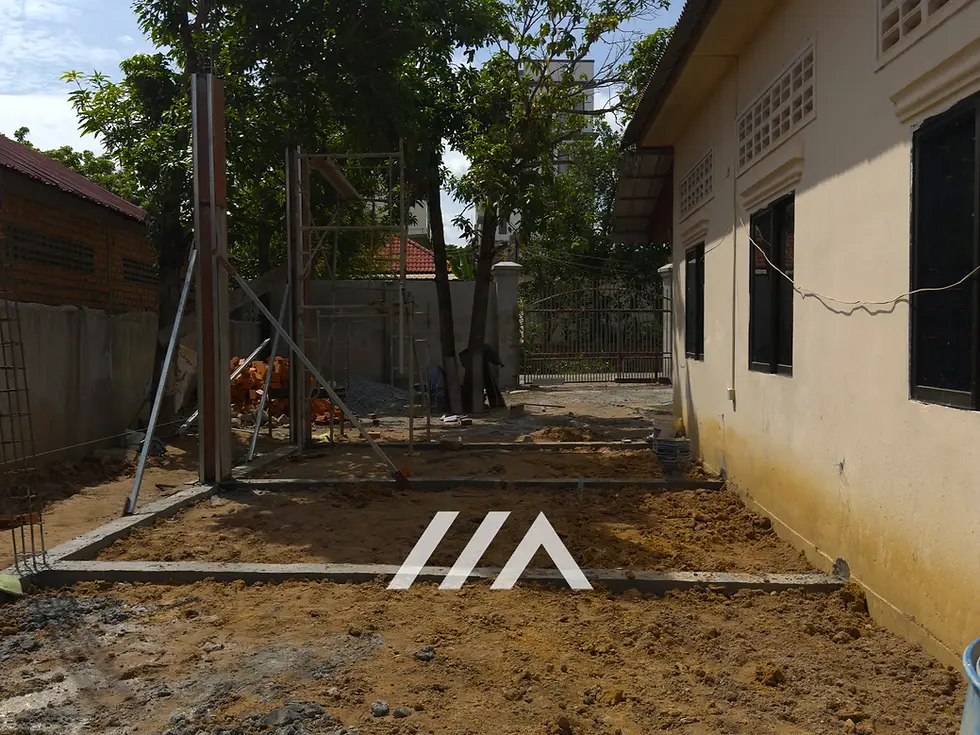
With the foundations complete and fully cured, construction moves into one of the most exciting stages of the project. This is where an empty building site begins to transform into a recognisable home. Over the coming weeks and months, reinforced concrete columns rise from the foundations, structural beams connect the building together, walls define each room, and the roof is installed to protect the structure from the elements. Although many people think of this as simply "building the house," this stage involves hundreds of carefully coordinated tasks that must be completed in the correct order. Every element relies on the accuracy and quality of the work completed before it.
Professional supervision and quality control remain essential throughout this phase to ensure the villa is structurally sound, accurately built, and ready for the next stages of construction.
Building the Reinforced Concrete Frame
Most modern luxury villas in Cambodia are constructed using a reinforced concrete frame.
This construction method has become the preferred choice because it provides exceptional strength, durability, and flexibility while performing well in Cambodia's tropical climate.
The structural frame normally consists of:
Reinforced concrete columns
Reinforced concrete beams
Suspended floor slabs
Staircases
Roof support structures
Together, these components form the structural skeleton of the villa.
Every wall, roof, ceiling, and floor is supported by this engineered framework.
Constructing the Columns
Columns are among the most important structural elements of any villa.
They transfer the weight of the building safely through the foundations and into the ground below. Before concrete is poured, steel reinforcement cages are assembled according to the structural engineer's drawings. These cages are carefully positioned, checked for alignment, and enclosed within formwork before concrete is placed. Each column must remain perfectly vertical and correctly positioned, as even small deviations can affect the alignment of beams, walls, windows, and roof structures later in the project.
Installing Structural Beams
Once the columns have gained sufficient strength, reinforced concrete beams are constructed to connect the entire structural frame.
These beams distribute loads throughout the building and provide support for suspended slabs, walls, and roofing systems.
Beam construction requires careful attention to:
Reinforcement placement
Formwork accuracy
Concrete cover
Service penetrations
Structural dimensions
Professional inspections are carried out before concrete is poured to ensure every beam meets the engineering specifications.
Suspended Concrete Floor Slabs
For two-storey villas, suspended concrete slabs create the floor structure between levels.
Temporary supports and formwork are installed before reinforcement steel is placed according to the structural drawings. Concrete is then poured across the slab in a continuous operation to create a strong, level floor capable of supporting the upper level of the home. Once poured, the slab must be properly cured and allowed to achieve sufficient strength before temporary supports are removed.
Constructing Staircases
Concrete staircases are generally formed as part of the structural frame.
Accurate measurements are essential to ensure:
Comfortable step heights
Consistent tread depth
Safe handrail positions
Smooth transitions between floors
Because staircases become a permanent feature of the home, careful planning at this stage helps ensure they remain both functional and visually appealing.
Building the Internal and External Walls
Once the concrete frame has been completed, masonry work begins.
Walls define the individual spaces within the villa and begin to reveal the final layout of the home.
Depending on the design, walls may be constructed using:
Concrete blocks
Clay bricks
Lightweight blocks
Engineered masonry products
Each material offers different advantages in terms of strength, insulation, sound reduction, and construction speed. Walls are built carefully to maintain straight lines, level surfaces, and accurate dimensions while leaving openings for doors, windows, plumbing, and electrical services.
Window and Door Openings
As masonry progresses, precise openings are formed for:
External doors
Internal doors
Sliding glass doors
Feature windows
Skylights
Garage doors
Accuracy is particularly important because even small dimensional errors can create difficulties when installing custom-made aluminium frames and glazing later in the project.
Lintels and Structural Supports
Where doors and windows interrupt masonry walls, reinforced concrete or steel lintels are installed above the openings.
These structural members transfer the weight of the wall safely around the opening while preventing cracking or settlement.
Proper installation ensures the finished walls remain stable throughout the life of the building.
Roof Construction
The roof is one of the most important components of any luxury villa.
Its primary role is to protect the structure from Cambodia's tropical weather while contributing to the overall architectural appearance of the home.
Roof systems vary depending on the design and may include:
Reinforced concrete roof slabs
Steel roof framing
Timber roof structures
Tiled roofs
Standing seam metal roofs
Flat roof systems
Combination roof designs
Each system is selected according to structural requirements, architectural style, and long-term maintenance considerations.
Waterproofing the Roof
Before roof finishes are installed, waterproofing systems are applied to prevent moisture penetration.
Depending on the design, waterproofing may include:
Membrane systems
Cementitious waterproof coatings
Liquid-applied membranes
Protective screeds
Flashing around roof penetrations
High-quality waterproofing significantly reduces the risk of leaks and protects the structure beneath.
Thermal Performance and Insulation
Although Cambodia has a warm climate, roof insulation plays a vital role in improving comfort and reducing energy consumption.
Insulation helps minimise heat transfer into the villa, reducing reliance on air conditioning and improving year-round indoor comfort.
Additional energy-efficient features may include:
Reflective roof membranes
Ventilated roof spaces
Insulated ceilings
Solar-reflective roofing materials
Installing Windows and External Doors
Once the structure is weatherproof, aluminium frames and glazing can be installed.
Modern luxury villas often incorporate large areas of glass to maximise natural light and connect indoor spaces with gardens and swimming pools.
Popular window features include:
Powder-coated aluminium frames
Tempered safety glass
Laminated glazing
Double glazing
Sliding systems
Bi-fold doors
Fixed feature windows
Correct installation is essential to ensure weather resistance, smooth operation, and long-term durability.
Exterior Rendering and Plastering
After the walls are complete, rendering begins.
Rendering creates smooth, consistent wall surfaces while protecting the underlying masonry from weather exposure.
Internal plastering is also completed during this stage, creating perfectly flat surfaces ready for painting and decorative finishes.
Careful workmanship helps prevent cracking and ensures high-quality final finishes throughout the villa.
Ongoing Quality Control
Throughout structural construction, regular inspections help ensure every stage meets the required standards before work progresses.
Typical quality checks include:
Concrete strength
Structural alignment
Wall dimensions
Verticality
Reinforcement placement
Roof waterproofing
Window opening dimensions
Surface finishes
Identifying and correcting issues early is significantly easier than making changes after later stages of construction have begun.
Watching Your Villa Come to Life
For many homeowners, this is the most rewarding phase of the entire project. What once existed only as architectural drawings is now becoming a physical home that can be walked through, explored, and experienced. Rooms begin to feel real, windows frame future garden views, terraces overlook the pool area, and the overall scale of the villa becomes clear for the first time. By the end of this stage, the villa has evolved from an empty piece of land into a fully formed structure ready for its internal services and luxury finishes.
Installing Plumbing, Electrical, Air Conditioning & Essential Services

Once the structural frame has been completed, the roof is installed, and the building is weatherproof, attention turns to the systems that make a villa comfortable, functional, and ready for everyday living. Although these systems are largely hidden behind walls, ceilings, and floors, they are among the most important components of the entire build. High-quality plumbing, electrical, drainage, air conditioning, and communication systems contribute to the long-term performance of the property, while poor workmanship can result in expensive repairs and unnecessary disruption after the villa has been completed.
This stage is often referred to as the first fix because much of the work takes place before plastering, tiling, ceilings, and decorative finishes are installed.
Planning Before Installation
Successful service installation begins long before any pipes or cables are fitted.
Every outlet, switch, water pipe, drain, light fitting, air conditioning unit, and data point should already be shown on the construction drawings.
During this stage, project managers coordinate multiple specialist contractors to ensure every service works together without conflict.
Careful planning helps avoid situations where electrical conduits interfere with plumbing pipes, drainage routes clash with structural beams, or air conditioning systems compete for the same ceiling space.
Plumbing Installation
A well-designed plumbing system ensures reliable water supply throughout the villa while safely removing wastewater.
Modern plumbing systems generally include separate pipework for:
Cold water supply
Hot water supply
Wastewater drainage
Stormwater drainage
Swimming pool services
Irrigation systems
Outdoor taps
Water filtration
Pipework is installed before walls are plastered and before floor finishes are laid, making accuracy extremely important. Pressure testing is normally carried out before the system is concealed to identify leaks while repairs remain straightforward.
Water Supply Options
Depending on the location of your land, there are several options for supplying fresh water to your villa.
City Water Connection
Many areas of Krong Siem Reap have access to municipal water supplies.
Where available, this provides a convenient and reliable source of water for everyday use.
Before construction begins, it's important to confirm:
Availability of connection
Water pressure
Meter location
Future infrastructure upgrades
Private Water Wells
In areas where city water is unavailable, many luxury villas install private water wells.
A professionally drilled well can provide an independent water source for the property.
Typical well systems include:
Borehole
Submersible pump
Pressure tank
Storage tank
Filtration system
Control equipment
Water quality should always be tested before being used for drinking purposes, and appropriate filtration or purification systems should be installed where necessary.
Water Storage
Many villas incorporate water storage tanks to provide a consistent supply during periods of high demand or temporary service interruptions.
Storage systems may be installed:
Underground
Above ground
On elevated platforms
Within dedicated plant rooms
The appropriate size depends on the number of occupants and expected water consumption.
Hot Water Systems
Providing reliable hot water throughout the home requires careful planning.
Popular options include:
Electric storage heaters
Instant water heaters
Heat pump systems
Solar hot water systems
The choice depends on household size, energy efficiency goals, and long-term operating costs.
Wastewater and Drainage
Every villa must safely dispose of wastewater produced by kitchens, bathrooms, laundries, and other plumbing fixtures.
Where municipal sewer connections are unavailable, private wastewater systems are generally installed.
These may include:
Septic tanks
Soakaway systems
Inspection chambers
Grease traps where required
Correct sizing is essential to ensure reliable long-term performance while reducing maintenance requirements.
Stormwater Management
Heavy tropical rainfall makes effective stormwater management essential. Roof water and surface runoff should be directed away from the building using properly designed drainage systems.
These often include:
Gutters
Downpipes
Surface drains
Underground drainage pipes
Soakaways
Collection pits
Rainwater harvesting systems
Managing rainwater correctly helps protect foundations, gardens, driveways, and surrounding structures.
Electrical Installation
Electrical systems form the backbone of every modern luxury villa. During first-fix installation, electricians position conduits, wiring, switch boxes, and distribution boards before walls and ceilings are finished. Careful planning ensures the electrical system remains safe, reliable, and capable of supporting future technology.
Typical electrical installations include:
Main switchboard
Consumer units
Power outlets
Lighting circuits
Outdoor power
Pool equipment
Kitchen appliances
Air conditioning supplies
Garage power
Garden lighting
Modern villas are also designed with spare capacity for future additions.
Lighting Design
Lighting has a major influence on both the appearance and functionality of a luxury villa.
Rather than simply illuminating rooms, professional lighting creates atmosphere and highlights architectural features.
A well-designed lighting scheme often combines:
Ambient lighting
Task lighting
Accent lighting
Decorative lighting
Landscape lighting
Pool lighting
Stair lighting
Feature wall lighting
Using multiple lighting layers allows homeowners to adjust the mood of different spaces throughout the day.
Backup Power Solutions
Power interruptions can occur in many parts of the world, making backup systems a worthwhile consideration.
Many luxury villas include:
Automatic backup generators
Battery storage systems
Uninterruptible power supplies (UPS)
Solar battery integration
These systems help maintain essential services during outages and provide peace of mind.
Solar Energy Systems
Solar power has become an increasingly popular addition to modern villas.
Planning for solar during construction is generally easier and more cost-effective than retrofitting panels after completion.
Solar installations may include:
Photovoltaic panels
Battery storage
Inverters
Monitoring systems
EV charging integration
These systems can reduce electricity costs while improving energy independence.
Air Conditioning and Ventilation
Cambodia's tropical climate makes effective cooling an important consideration.
The air conditioning system should be designed alongside the architectural layout rather than added as an afterthought.
Popular systems include:
Wall-mounted split systems
Concealed ducted systems
Multi-zone systems
VRF (Variable Refrigerant Flow) systems
Correct sizing is essential. An oversized unit may waste energy, while an undersized system may struggle to maintain comfortable temperatures. Natural ventilation should also be incorporated wherever possible to reduce reliance on mechanical cooling.
Mechanical Ventilation
Certain areas of the villa require dedicated ventilation.
These include:
Bathrooms
Kitchens
Laundry rooms
Plant rooms
Walk-in wardrobes
Mechanical extraction helps remove moisture, improve indoor air quality, and reduce the risk of mould.
Internet, Data and Smart Home Infrastructure
Reliable internet connectivity is now considered an essential service rather than a luxury.
Planning communication infrastructure during construction allows wiring to remain concealed within walls and ceilings.
Many modern villas include:
Fibre internet connections
Data cabling
Wi-Fi access points
CCTV
Video intercom systems
Alarm systems
Smart lighting
Smart locks
Automated gates
Multi-room audio
Home automation hubs
Installing these systems during construction is significantly easier than modifying completed walls later.
Swimming Pool Services
If your villa includes a swimming pool, several mechanical systems must be installed before landscaping begins.
These typically include:
Circulation pipework
Filtration equipment
Pumps
Pool lighting
Water treatment systems
Overflow drainage
Heating provisions where required
Planning adequate plant room space makes future servicing considerably easier.
Quality Assurance and Testing
Before walls are plastered or ceilings are closed, every service should be inspected and tested.
Typical testing includes:
Water pressure testing
Drainage testing
Electrical continuity testing
Insulation resistance testing
Air conditioning commissioning
Pump testing
Generator testing
Internet and communications testing
Resolving issues at this stage is far simpler than carrying out repairs after decorative finishes have been completed.
Building for the Future
Modern luxury villas should not only meet today's requirements but also accommodate tomorrow's technology. During construction, many homeowners choose to install spare conduits and additional capacity for future upgrades such as:
Electric vehicle chargers
Expanded solar systems
Additional security cameras
Home offices
Guest accommodation
Garden lighting
Pool heating
Smart home automation
Planning ahead adds flexibility while avoiding expensive alterations in the future.
Hidden Systems That Make Luxury Living Possible
Although plumbing, electrical, air conditioning, and communication systems are rarely visible once construction is complete, they play a critical role in the comfort, efficiency, and reliability of your home. At Luxe Property Cambodia, we coordinate every specialist trade to ensure these systems are installed to a high standard, thoroughly tested, and fully integrated with the overall design of the villa. By investing in quality infrastructure during construction, homeowners benefit from a property that performs reliably for many years to come. With all essential services installed and tested, the villa is now ready for one of the most rewarding stages of the entire project—bringing the interior to life through premium finishes, bespoke joinery, luxury kitchens, elegant bathrooms, flooring, lighting, and custom-designed living spaces.
Interior Finishes, Landscaping, Project Completion & Moving Into Your New Villa

After months of planning, engineering, structural construction, and service installations, your villa enters the most rewarding phase of the entire project. This is where concrete structures become elegant living spaces, empty rooms transform into beautifully designed interiors, and landscaped gardens begin to surround what was once an empty piece of land. For many homeowners, this is the first time they can truly imagine themselves living in their new home. Every finish, material, colour, texture, and fixture comes together to create a villa that reflects your lifestyle and personality. Although this stage is visually exciting, maintaining quality control remains just as important as it was during the structural phases of construction.
Flooring Installation
Flooring is one of the largest visible surfaces within any villa and has a significant influence on both appearance and functionality.
Popular flooring choices include:
Large-format porcelain tiles
Natural stone
Marble
Engineered timber
Hardwood flooring
Polished concrete
Outdoor anti-slip paving
Each material should be selected based on durability, maintenance requirements, climate suitability, and the overall design of the home. Professional installation ensures perfectly level surfaces, consistent grout lines, and seamless transitions between rooms.
Ceiling Installation
Ceilings provide much more than a finished appearance.
They also conceal:
Electrical wiring
Air conditioning ductwork
Plumbing services
Lighting systems
Insulation
Luxury villas often incorporate:
Coffered ceilings
Bulkheads
Shadow line details
Timber feature ceilings
Recessed lighting
Acoustic insulation
These architectural details add depth and sophistication throughout the home.
Painting and Decorative Finishes
Once plaster has fully cured, painting begins. Professional preparation is essential for achieving high-quality finishes. Walls are carefully sanded, primed, and coated to produce smooth, durable surfaces. Exterior finishes should also be selected to withstand Cambodia's tropical climate, providing long-term protection against heat, humidity, and seasonal rainfall.
Luxury Kitchen Installation
The kitchen is often considered the heart of the home. At this stage, bespoke cabinetry, stone benchtops, splashbacks, appliances, and feature lighting are installed.
Luxury kitchens commonly include:
Large islands
Soft-close cabinetry
Stone countertops
Integrated appliances
Walk-in pantries
Wine storage
Breakfast bars
Hidden storage solutions
Premium tapware
Every component should be carefully measured and installed to achieve a seamless finish.
Bathroom Fit-Out
Bathrooms are transformed from waterproof concrete shells into luxurious spaces designed for comfort and relaxation.
Typical installations include:
Walk-in showers
Freestanding bathtubs
Floating vanities
Premium sanitaryware
Frameless glass screens
Feature mirrors
Designer tapware
Heated mirrors where required
High-quality waterproofing systems
Attention to detail during installation helps ensure both durability and visual appeal.
Custom Joinery and Built-In Furniture
Bespoke cabinetry gives a villa its unique character.
Custom joinery may include:
Walk-in wardrobes
Entertainment units
Bookshelves
Home office furniture
Laundry cabinetry
Bathroom storage
Display shelving
Wine cellars
Well-designed joinery maximises storage while creating a clean and elegant appearance throughout the property.
Internal Doors and Hardware
As the interior nears completion, internal doors, handles, locks, and architectural hardware are installed. Although often overlooked, these finishing details contribute significantly to the overall quality and feel of the home. Consistency across all hardware helps create a refined and cohesive design.
Final Electrical and Plumbing Fixtures
The second-fix stage includes installing visible fixtures such as:
Light fittings
Power outlets
Switches
Ceiling fans
Bathroom accessories
Kitchen mixers
Basins
Toilets
Shower fittings
Water heaters
Every system is tested once again to ensure safe and reliable operation.
Swimming Pool Completion
If your villa includes a swimming pool, this stage involves completing:
Pool tiling
Coping
Filtration systems
Pumps
Lighting
Water balancing
Safety equipment
Once filled, the pool undergoes testing to ensure water quality and mechanical systems operate correctly.
Landscaping and Outdoor Living
The external areas are just as important as the interior.
Professional landscaping transforms a completed building into a luxury residence.
Depending on the design, external works may include:
Tropical planting
Mature trees
Lawns
Irrigation systems
Outdoor lighting
Stone pathways
Driveways
Boundary walls
Electric entrance gates
Outdoor kitchens
Pergolas
Fire pits
Water features
Thoughtful landscaping enhances privacy while improving the overall appearance and value of the property.
Furniture and Interior Styling
Once construction has been completed, furniture and decorative styling complete the transformation.
Interior designers may assist with selecting:
Sofas
Dining furniture
Bedroom suites
Artwork
Curtains
Rugs
Decorative lighting
Accessories
Outdoor furniture
A carefully curated interior creates a home that feels welcoming from the moment you walk through the front door.
Final Cleaning
Before handover, the property undergoes a comprehensive professional clean.
This includes:
Windows
Floors
Kitchens
Bathrooms
Light fittings
Joinery
External paving
Swimming pool
Landscaping
Removing construction dust allows every finish to be properly inspected.
Practical Completion Inspection
Before accepting the completed villa, a detailed inspection should be carried out.
This process is often referred to as a snagging inspection or practical completion inspection.
Typical items reviewed include:
Paint finishes
Tile alignment
Door operation
Window seals
Electrical systems
Plumbing fixtures
Air conditioning
Lighting
Cabinetry
Waterproofing
Pool equipment
Landscaping
Any minor defects identified can then be rectified before final handover.
Handover
Handover represents the completion of months of planning, design, engineering, and construction.
At this stage, homeowners typically receive:
Keys
Warranty information
Operating manuals
Maintenance guidance
Equipment documentation
As-built drawings where applicable
Walking into your completed villa for the first time is a milestone that reflects the hard work of everyone involved in the project.
Maintaining Your Villa
A luxury villa is a long-term investment and should be maintained accordingly.
Routine maintenance helps preserve both its appearance and value.
Regular maintenance may include:
Roof inspections
Air conditioning servicing
Pool maintenance
Garden care
Exterior painting
Waterproofing inspections
Electrical testing
Plumbing inspections
Pest control
Cleaning drainage systems
Establishing a preventative maintenance schedule helps reduce future repair costs while keeping the property in excellent condition.
Why Build With Luxe Property Cambodia?
Building a luxury villa is one of the most significant investments many people will ever make. Choosing the right construction partner can make the difference between a smooth, enjoyable experience and one filled with unexpected delays, hidden costs, and unnecessary stress. At Luxe Property Cambodia, we provide complete end-to-end project management, guiding our clients through every stage of the process from sourcing the right land and reviewing legal documentation through to architectural design, engineering, construction, interior fit-out, landscaping, and final handover.
Our team combines local expertise with international project management standards, ensuring every villa is built with attention to detail, transparent communication, and a commitment to quality. Whether you're creating a permanent family home, a retirement villa, a luxury holiday property, or an investment residence, we work closely with you to deliver a home that reflects your vision and stands the test of time.
Final Thoughts
Building a villa in Krong Siem Reap is more than a construction project it's the creation of a home, a lifestyle, and a long-term investment in one of Cambodia's most exciting and rapidly developing cities. While the process involves many stages, from selecting land and designing your villa to engineering, construction, interior finishes, and landscaping, each step plays an important role in achieving a successful outcome. With careful planning, experienced professionals, and a trusted construction partner, building a custom villa can be one of the most rewarding experiences you'll ever undertake. If you're considering building a luxury villa in Krong Siem Reap, Luxe Property Cambodia is here to guide you through every step of the journey. Whether you're still searching for land or you're ready to begin construction, our experienced team can help turn your vision into reality with a transparent, professionally managed approach from concept to completion.
Frequently Asked Questions (FAQs)
1. How long does it take to build a villa in Krong Siem Reap?
The construction timeline depends on the size, complexity, and level of finishes. Most luxury villas take between 10 and 18 months from design to completion, although larger or highly customised homes may take longer. Weather conditions, material lead times, and permit approvals can also influence the overall schedule.
2. How much does it cost to build a villa in Krong Siem Reap?
Construction costs vary depending on the design, materials, location, and level of luxury. Factors such as swimming pools, bespoke kitchens, imported finishes, landscaping, and smart home systems all influence the final cost. A detailed quotation should always be prepared before construction begins.
3. Can foreigners build a villa in Cambodia?
Yes. Foreigners can legally build villas in Cambodia, although there are legal restrictions regarding direct land ownership. Professional legal advice should be obtained to determine the most appropriate ownership structure for your circumstances.
4. Can I design my own villa?
Absolutely. Many homeowners begin with their own ideas or inspiration images before working with an architect to develop detailed construction drawings that comply with engineering requirements and local regulations.
5. How long does the design process take?
Depending on the complexity of the project, architectural design usually takes between four and twelve weeks, including revisions, engineering coordination, and preparation of construction drawings.
6. Do I need planning permission before building?
In most cases, construction should not begin until the appropriate approvals and documentation have been obtained in accordance with local regulations. Requirements vary depending on the property and location.
7. What type of foundation is best for a villa?
There is no single foundation suitable for every project. The correct foundation depends on soil conditions, structural loads, groundwater levels, and engineering calculations. A professional soil investigation should be completed before foundation design begins.
8. Is a soil test necessary?
Yes. A soil investigation helps determine the ground's bearing capacity and allows engineers to design safe, efficient foundations while reducing the risk of future settlement or structural movement.
9. What construction method is commonly used in Cambodia?
Most modern luxury villas are built using reinforced concrete columns, beams, and slabs combined with masonry walls. This construction method provides excellent strength and durability in Cambodia's tropical climate.
10. Can I install solar panels during construction?
Yes. Planning for solar energy during construction is usually more cost-effective than retrofitting a completed villa. Many homeowners also prepare for future battery storage and electric vehicle charging.
11. Should I use city water or install a private well?
This depends on the location of your property. Some areas have reliable municipal water supplies, while others may require a private well, water storage tanks, and filtration systems.
12. Will my villa need a septic tank?
If the property is not connected to a municipal sewer system, a septic tank and appropriate wastewater treatment system will usually be required.
13. Can I include a swimming pool?
Yes. Swimming pools are one of the most popular features in luxury villas throughout Siem Reap. They should be designed alongside the villa to ensure the plumbing, filtration systems, electrical services, and landscaping integrate seamlessly.
14. What is included in project management?
Professional project management typically includes budgeting, scheduling, procurement, contractor coordination, quality control, site inspections, progress reporting, and client communication throughout the construction process.
15. Can I build while living overseas?
Yes. Many international clients successfully build villas while living abroad. Regular progress updates, photographs, videos, online meetings, and transparent project management allow construction to continue efficiently without requiring the owner to remain in Cambodia.
16. What materials are commonly used in luxury villas?
Luxury villas often incorporate reinforced concrete, natural stone, porcelain tiles, aluminium windows, engineered timber, premium roofing systems, bespoke cabinetry, marble, quartz worktops, and imported fixtures depending on the client's preferences.
17. Can I build a completely custom villa?
Yes. One of the biggest advantages of building from scratch is complete design flexibility. Every aspect of the villa can be customised to suit your lifestyle, architectural preferences, and budget.
18. What are the biggest mistakes people make when building a villa?
Common mistakes include purchasing unsuitable land, skipping soil testing, underestimating the budget, making design changes during construction, selecting contractors based solely on price, and failing to properly supervise the project.
19. How can I reduce future maintenance costs?
Investing in quality construction materials, professional waterproofing, proper drainage, energy-efficient systems, and preventative maintenance will significantly reduce long-term repair costs.
20. Why should I choose Luxe Property Cambodia?
Luxe Property Cambodia provides complete end-to-end villa construction services, including land sourcing, project planning, architectural design, engineering coordination, construction management, renovations, bespoke interiors, landscaping, and final handover. Our goal is to deliver high-quality homes with transparent communication, professional project management, and exceptional attention to detail from concept to completion.


